Sportfishing regulations for the Inland District of Connecticut will be updated January 1, 2026, according to the Connecticut Department of Energy and Environmental Protection (DEEP).
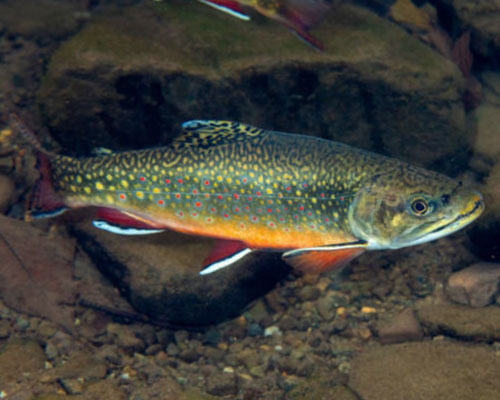
The updated regulations provide additional protections for declining populations of brook trout, the only species of trout native to Connecticut.
Decades of monitoring by DEEP biologists shows a clear trend of reduced range and abundance of brook trout in the state. Brook trout require cold water to survive and flourish, meaning that they are particularly susceptible to the impacts of our warming climate.
“The brook trout is an iconic New England fish that is losing ground here in Connecticut,” said DEEP Commissioner Katie Dykes. “DEEP is pleased that our state’s fishing community broadly supported new fishing rules that will provide additional protections for this special fish. We all have a role to play in ensuring that future generations of Connecticut residents and visitors will have access to healthy streams and fish populations.”
“DEEP’s new trout regulations will provide enhanced protections for wild brook trout while also simplifying statewide trout fishing regulations,” said Pete Aarrestad, Director of the DEEP Fisheries Division. “These changes reflect DEEP’s commitment to managing our state’s natural resources for resilience to climate change and providing high quality and accessible outdoor recreation opportunities.”
Effective January 1, 2026, only trout nine inches or longer can be kept in waters open to trout harvest in the state, except where a more restrictive length limit is already in place. There has not been a default statewide minimum length limit for trout since 1953, when it was six inches.
The new default nine-inch minimum length limit for trout will be highly protective of wild brook trout in the streams where they are found, as most wild brook trout in Connecticut are less than nine inches in length.
DEEP stocks hatchery-raised brook trout in many waters, and nearly all these fish are greater than nine inches in length, thus providing opportunities for brook trout harvest.
Additionally, 22 waters or portions of waters are now newly designated as Class 1 Wild Trout Management Areas. Wild brook trout populations in these areas now will be protected by year-round catch-and-release-only regulations and a requirement that anglers use only artificial lures or flies with a single barbless hook.
Trout regulations also have been simplified via the removal of special regulations on several waterbodies, which will now be subject to default statewide trout regulations.
The updated trout regulations, as well as changes to some other inland fishing regulations were subject to a public comment period and public hearing during May 2024 and received substantial public support. All information about the regulatory process is available online via the eRegulations system under tracking number PR2023-034.
A summary of the new regulations can be found on the DEEP web site. The new regulations will be reflected in the 2026 Online Freshwater Fishing Guide and the 2026 printed Inland Fishing Regulations booklets available at DEEP offices, many Town Clerk offices, and fishing license vendors. The regulations also are available through the free version of the FishBrain APP.